
Understanding Apology Languages:
Insights for Meaningful Relationships

How to Apologize Effectively in Conflicts: A Guide
Mastering Apologies for Effective Conflict Resolution: How to Apologize with Sincerity and Rebuild Relationships
Apologizing well is a skill that restores connection and moves conflict toward repair — but it’s not always easy. This article walks you step by step through what makes an apology truly effective, why the 5 Apology Languages™, building on the foundational work of the 5 Love Languages™, matter, and practical ways to use them in both personal and professional relationships. You’ll find clear strategies for rebuilding trust, approaches that work at work, and the psychological ideas behind apologies that actually stick. For additional tools and guidance, explore resources from Dr. Jennifer Thomas designed to help you apologize more effectively.
What are the essential steps to apologize sincerely?
A sincere apology follows a few reliable steps that make it meaningful and useful. When you know and use those steps, an apology becomes a bridge — not just words — and can begin the work of healing.
How to express regret in a way that helps
Expressing regret means naming the hurt you caused and saying so plainly. Specific language matters: for example, “I’m truly sorry I said that and caused you pain” tells the other person you see the impact. Clear, direct regret helps people feel heard and opens the door to repair.
Why taking responsibility matters in a real apology
Owning your part shows accountability and signals you’re serious about change. Saying what you did, without excuses, rebuilds trust and reassures the other person that you recognize their experience. Responsibility creates safety and makes reconciliation possible.
How do the 5 Apology Languages™ improve conflict resolution?
The 5 Apology Languages™ give you a map for how people prefer to receive apologies. When you match your apology to the recipient’s preferred language, it lands more genuinely and speeds repair.
What are the 5 Apology Languages™ and what do they mean?
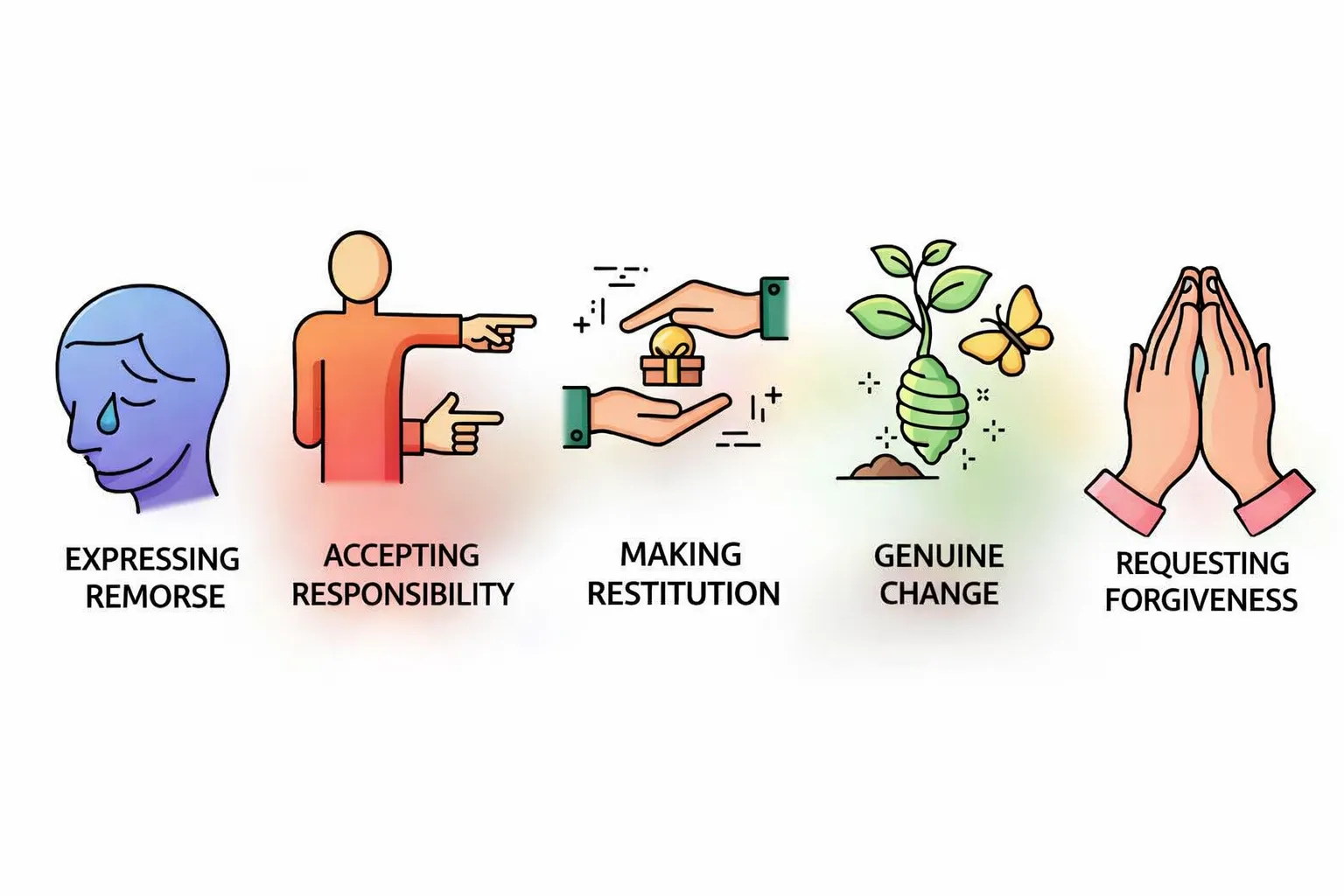
Expressing Regret: Saying you’re sorry for the harm you caused.
Accepting Responsibility: Acknowledging your specific role in the situation.
Making Restitution: Offering to repair or compensate for the damage.
Genuinely Repenting: Showing you’ll change the behavior that caused the harm.
Requesting Forgiveness: Inviting the person to forgive when they’re ready.
Knowing these languages helps you tailor your apology so it meets the emotional needs of the person you hurt — and increases the chance of a true resolution.
How to apply each Apology Language in personal and workplace settings
Different settings call for different emphasis. In close relationships, clear regret and taking responsibility often soothe emotional wounds. In the workplace — as discussed in Making Things Right at Work — restitution and demonstrated behavior change build credibility. The key is noticing what the person needs and responding accordingly.
How can apologies repair relationships after conflict?
An apology, when done well, can begin to rebuild trust and open a path to forgiveness. It signals respect for the other person’s experience and a willingness to make things right.
Proven strategies to rebuild trust and encourage forgiveness
Open communication: Invite honest conversation about feelings and perspectives.
Consistency: Follow through on the commitments you make after apologizing.
Time: Give the other person space to process; healing usually isn’t immediate.
These steps create a steady environment where trust can be restored and forgiveness can grow.
How to navigate common challenges in relationship repair
Repair often stalls because of defensiveness, missteps in communication, or lingering resentment. Counter these by practicing active listening, validating the other person’s feelings, and staying open to feedback. Small, genuine changes over time often speak louder than a single perfect apology.
What are effective apology techniques for workplace conflict?
At work, apologies protect professional relationships and model accountability. The right approach keeps collaboration intact and preserves trust across teams. For more in-depth guidance on navigating professional disputes, explore resources on workplace apologies.
Using the Apology Languages to resolve professional disputes
Apply the 5 Apology Languages™ in ways that fit office dynamics. For a colleague who feels undervalued, a clear expression of regret plus ownership can repair rapport. For a manager, follow-through on corrective steps demonstrates sincere repentance and restores confidence.
Best practices for apologizing to colleagues and leaders

Be timely: Address the issue promptly before it escalates.
Be specific: Name exactly what you did and why it was wrong.
Follow up: Check in later to show continued commitment to repair.
These habits demonstrate professionalism and a genuine desire to keep working relationships healthy.
How does understanding the psychology of apology improve conflict outcomes?
Apologies work when they connect emotionally and make sense to both people involved. Psychology helps explain why some apologies land and others don’t.
Psychological principles that support effective apologies
Effective apologies rely on empathy, recognition of cognitive dissonance, and social validation. Empathy helps you understand the other person’s pain; acknowledging the mismatch between your actions and your values motivates change; and social validation confirms the hurt was real. Together, these principles make an apology more likely to heal.
How emotional intelligence helps the apology and forgiveness process
Emotional intelligence enables you to manage your feelings and respond to others’ emotions thoughtfully. When you pause, listen, and adapt your words to the other person’s needs, your apology is more authentic and forgiveness becomes more possible.
How can Dr. Jennifer Thomas’s resources support mastering apologies?
Dr. Jennifer Thomas provides tools and teaching that translate research into practical steps for better communication and deeper connection.
What role does the AI-Powered Apology Helper play in crafting apologies?
The AI-Powered Apology Helper offers tailored suggestions to shape an apology that fits your situation. It’s a practical tool to help you choose language and actions that are more likely to be received as sincere — a helpful aid as you practice this skill.
How do books and workshops deepen apology skills and conflict resolution?
Books and workshops from Dr. Thomas give concrete examples, exercises, and guidance you can practice in real life. They combine theory with hands-on tools so you can improve your apology skills in a supportive, structured way.
Frequently Asked Questions
What are the common mistakes people make when apologizing?
Common missteps include staying vague, shifting blame, minimizing the other person’s feelings, or offering excuses. Rushing the apology without genuine remorse also undermines it. Avoid these pitfalls by being specific, accountable, and focused on the other person’s experience.
How can I tell if my apology was accepted?
Acceptance can show up in small ways: a change in tone, more openness to conversation, or an explicit “I forgive you.” Sometimes it takes time — watch for consistent shifts in behavior and willingness to engage. A respectful follow-up can also clarify where things stand.
Can apologies be harmful in certain situations?
Yes. An insincere or manipulative apology can increase hurt. Apologizing too often or for things that don’t require it can also dilute sincerity. Read the situation and the person’s emotional state before offering an apology to ensure it’s helpful, not harmful.
How can I improve my apology skills over time?
Practice, reflection, and feedback are key. Listen actively, rehearse apologies in safe settings, and ask trusted people for honest feedback. Read and learn from examples, and notice what helps others feel understood — then adapt your approach.
What should I do if my apology is not accepted?
If your apology isn’t accepted, respect the person’s feelings and give them space. Acknowledge their right to feel hurt and avoid pressuring them for forgiveness. Stay open to future conversation and let your actions demonstrate change over time.
Are there cultural differences in how apologies are perceived?
Absolutely. Culture shapes whether direct apologies are preferred, how “saving face” is handled, and what repair looks like. Be mindful of cultural norms when you apologize, especially in diverse or international settings, and adapt your approach with respect.
**